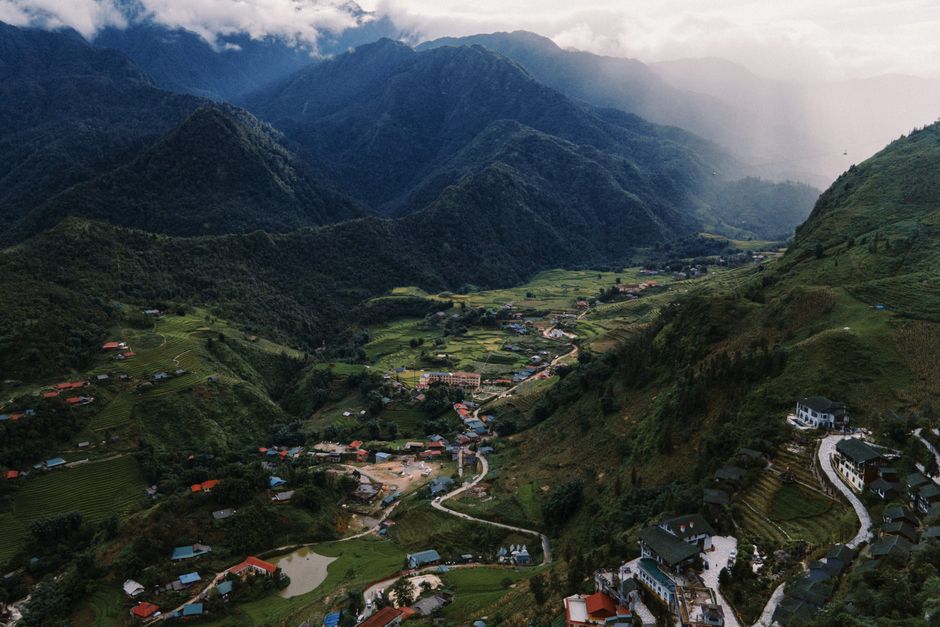
Sapa is a mountain town in northern Vietnam\’s Hoang Lien Son range — famous for rice terrace trekking, ethnic minority villages (Black Hmong, Red Dao), and views of Fansipan, Vietnam\’s highest peak. From Hanoi, the journey takes 5–6 hours by sleeper bus or overnight train (8 hours) to Lao Cai station, followed by a 45-minute transfer to Sapa.
🎟️ Search Hanoi → Sapa tickets on 12Go →
Option 1: Sleeper Bus (Most Popular)
Sleeper buses (giường nằm) from Hanoi to Sapa are the most popular option — they go directly to Sapa town (no need to connect in Lao Cai) and take around 5–6 hours. Operators like Sapa Express, Hung Thanh, and Queen Café run comfortable sleeper buses with reclining seats/pods from Hanoi\’s Giap Bat or My Dinh bus stations, and also from the Old Quarter tourist area.
- Journey time: 5–6 hours direct to Sapa
- Price: 200,000–350,000 VND ($8–14 USD)
- Departures: Evening (arrive Sapa around midnight) and early morning
- Pickup: Old Quarter, Giap Bat bus station
🎟️ Search Hanoi → Sapa sleeper tickets on 12Go →
Option 2: Overnight Train to Lao Cai + Transfer
The classic option — overnight sleeper train from Hanoi\’s Tran Quy Cap station (near the Old Quarter) to Lao Cai, then a 45-minute minibus transfer up the mountain to Sapa. Several private train companies (Livitrans, Victoria Express) offer comfortable soft-sleeper cabins — better than the state railways option for a small premium. Departs around 9–10 PM, arrives Lao Cai around 5–6 AM.
- Train time: ~7–8 hours (Hanoi → Lao Cai)
- Transfer to Sapa: ~45 minutes by minibus
- Price: 400,000–800,000 VND ($16–32 USD) for train; ~50,000 VND for bus transfer
- Best cabins: Livitrans or Victoria Express for comfort
🎟️ Search Hanoi → Lao Cai tickets on 12Go →
Option 3: Day Bus
Day buses run from Hanoi to Sapa and take around 5–6 hours. Less popular than the overnight options since they don\’t save a hotel night, but work well if you want daylight views of the mountain road approaching Sapa.
- Journey time: 5–6 hours
- Price: 180,000–280,000 VND ($7–11 USD)
Journey Summary
| Method | Time | Cost from | Best for |
|---|---|---|---|
| Sleeper bus | 5–6 hours | $8 USD | Most travellers |
| Overnight train + transfer | 8–9 hours | $16 USD | Comfort / classic |
| Day bus | 5–6 hours | $7 USD | Daytime views |
Where to Stay in Sapa
Sapa town has a wide range of accommodation — from budget guesthouses to boutique hotels with mountain views. The town itself is at 1,500m — bring warm layers even in summer. For a more immersive experience, some trekking operators offer homestays in nearby villages (Cat Cat, Ta Van, Ban Ho).
🏨 [Travelpayouts widget: Hotels in Sapa via Booking.com or Agoda]
Frequently Asked Questions
Is the train or bus better from Hanoi to Sapa?
Both work well. The sleeper bus is cheaper and goes directly to Sapa without a Lao Cai transfer. The overnight train is more scenic and the private train cabins are very comfortable — a classic Vietnam experience. For first-timers, the train is worth the extra cost.
How cold is Sapa?
Sapa is at 1,500m altitude. Temperatures range from around 5–15°C in winter (December–February) and 15–25°C in summer. It can snow in January. Bring warm layers and a waterproof jacket regardless of season — cloud and rain are frequent.
Related Guides
- Hanoi to Ha Long Bay: Cruise and Transport Guide
- Sapa Trekking: Villages, Routes and What to Expect
- Fansipan: How to Climb or Take the Cable Car
This post contains affiliate links. When you book through them, we may earn a small commission at no extra cost to you.